


St. Luke's
4.3628.00 Reviews
App Specs
- Version
- 11.7.2
- Updated On
- License
- Free
- Downloads
- 100,000+
- Developer
- St. Luke's University Health Network
- Categories
- Medical
- Platform
- Android
Screenshots
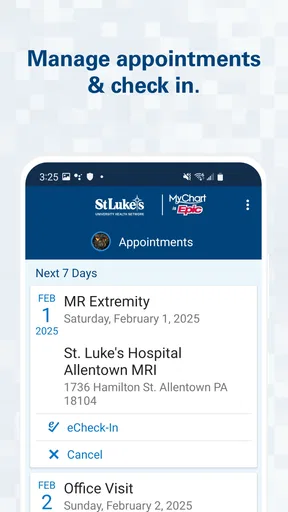
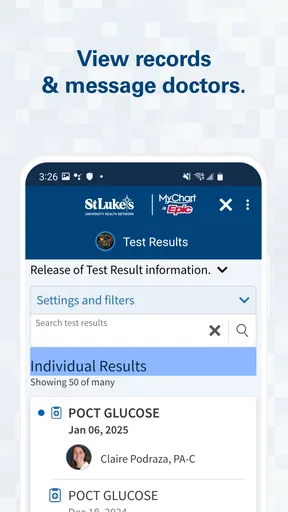
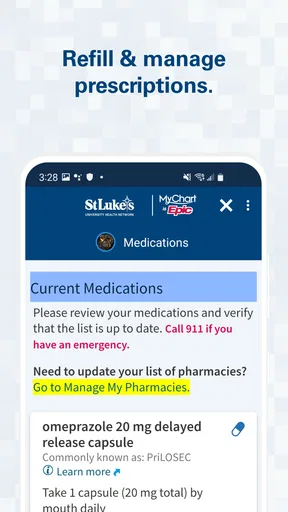
 Analysis by AppCompare
Managing health care is rarely difficult because of one dramatic task. More often, it is the small coordination jobs that wear me down: finding the right contact, remembering which part of a health system handles a question, checking an appointment detail, or trying to deal with care while I am away from a computer. St. Luke’s is built around that everyday problem. It is a free medical app from St. Luke's University Health Network, and its main value is putting parts of that health-care relationship into a phone-based space I can reach when I need it.
After using it, I see the app as most useful for people who already receive care through St. Luke’s and want a more convenient way to stay connected. It is not a replacement for a clinician, an emergency service, or a complete personal health system. Instead, it works best as a practical companion for routine care, especially when a household has several appointments, questions, or pieces of information to keep track of.
How St. Luke’s fits into real household routines
The clearest use case for me is a shared household situation. Imagine one person is arranging a visit, another family member needs help understanding where to go, and someone else is trying to keep track of follow-up care. In that situation, a phone app can be more convenient than relying on separate browser sessions, paper notes, and phone calls made at different times. St. Luke’s gives the health network a dedicated place on the device, which reduces the effort of remembering where to begin.
That convenience matters most during busy moments rather than relaxed planning. I might be standing in a pharmacy, sitting in a car before an appointment, or helping a relative organize the next step in care. A dedicated medical app is easier to reach than searching through old messages or trying to remember a general website address. The benefit is not flashy; it is the reduction of small points of friction.
At the same time, I would be careful about treating a shared phone as a shared medical account. Health information is personal, and household convenience should not blur individual boundaries. If several people use one device, I would make sure each person understands whose account is active before viewing or discussing anything. I would also avoid leaving the app open where another person could casually see private information.
This is one of the most important practical distinctions with St. Luke’s: shared-device convenience is not the same as shared medical access. The app can support coordination, but it should not encourage a family to treat one person’s health details as a communal dashboard. Each user should remain responsible for checking that the information on screen belongs to them and for protecting access to it.
What the app is good at during a busy day
For routine care, I found the dedicated format more useful than a general search engine. Searching online can lead to outdated pages, unrelated providers, or confusing results that require another round of checking. An official app from St. Luke's University Health Network gives the experience a clearer starting point for people already connected with that network.
Worth Reading Before You Choose

EA SPORTS FC Mobile 26 Is a Bigger Football Game, but It Takes Time

Flipboard Shows What News Apps Must Do Beyond the Feed

Switching to Android Auto Means Rethinking Your Driving Routine

Google Calendar Makes a Crowded Week Easier to Manage

Ludo King Makes the Most of the Minutes Between Plans

Baby Panda World Brings Quick Play to Modern Phones, but Its Game Library Feels Busy
I also like the idea of handling health tasks at the moment they arise. If I remember a question while preparing for a visit, I can keep it associated with the care process instead of trusting myself to remember it later. If I am helping another adult coordinate an appointment, the phone is already the device most people carry. That makes the app a sensible part of a personal routine, even if it does not eliminate every need to speak with staff.
There is a limit, though. An app cannot interpret symptoms with the judgment of a medical professional, and it should not become a reason to delay urgent help. For anything that feels serious or time-sensitive, I would use the appropriate emergency or clinical channel rather than assuming the app is the fastest answer. Its strengths are in organizing ordinary care, not replacing medical decision-making.
Setting up the right boundaries from the start
The first setup decision in a household is not technical; it is about ownership. I would install St. Luke’s on the device used by the person who needs access, then make sure that person understands the sign-in process and what information may be visible. If a partner, adult child, or caregiver is helping, I would agree on exactly what assistance is needed instead of casually sharing every credential.
That approach is especially important when one phone is used by several people. Before handing the device to someone else, I would sign out or otherwise return the app to an appropriate protected state if the app’s available account flow allows it. I would not assume that a family relationship automatically grants permission to view another person’s medical information. The app should support a conversation about consent, not replace one.
For older relatives, setup may need to happen slowly. I would help them identify the app, practice opening it, and write down the general steps they need without storing sensitive login details in an exposed note. The goal is independence, not creating a situation where one household member becomes the permanent gatekeeper for another person’s care.
For a teenager or younger user, I would take an even more careful approach. The app carries an Everyone content rating, but that describes the app’s age suitability, not a blanket answer to every question about account ownership, privacy, or medical consent. A parent may help with the device while still respecting the young person’s need for appropriate privacy and the health network’s account rules.
My practical advice is to decide three things before regular use: who owns the account, who may help, and what should happen when the phone is passed to another person. Those decisions prevent many more problems than simply installing the app and hoping the household sorts it out later.
Coordinating appointments and questions without taking over
St. Luke’s is most valuable when coordination remains simple. I would use it as a central starting point for my own care, then keep a short list of questions ready before contacting a provider or attending a visit. That preparation makes the app part of a larger workflow rather than a place where I expect every concern to be solved automatically.
For a household, one useful method is to separate responsibilities. One person can help with transportation, another can remind the patient about the time, and the patient can remain the person who reviews their own medical details. This division keeps practical support from turning into accidental control. It also makes it easier to notice when a question should go directly to the patient’s care team instead of being passed through several relatives.
I would not rely on memory alone after a conversation. If the app provides a relevant place to continue routine communication or review care information, I would check it after the interaction and make a personal note of the next action. If the issue is urgent, unclear, or outside the app’s normal purpose, I would use a direct clinical contact method. The app is a coordination aid, not a guarantee that every message receives immediate attention.
A realistic example is a parent helping an adult child prepare for a visit. The parent may help confirm the practical details and remind the child to bring questions, but the child should still review the information personally and decide what to discuss. That small boundary keeps the process supportive. It also avoids the common household mistake of having one person become the only person who knows what is happening.
Another example is a spouse managing several routine tasks while the other spouse is recovering. The app can make it easier to keep care-related work close at hand, but I would still confirm details with the patient and avoid assuming that an old appointment, message, or instruction applies to a new situation. Medical information changes, and convenience should never replace checking the current context.
Age, trust, and the limits of delegation
The Everyone rating makes St. Luke’s approachable for a broad audience, but health apps deserve a more mature privacy conversation than their age label alone suggests. A child may be able to open the app, yet that does not mean the child should manage an adult’s account. An older adult may need technical help, yet that does not mean a helper should automatically read every detail.
I think trust works best here when it is specific. Instead of saying, “You can use my health account,” a person might say, “Please help me find the appointment information,” or, “Please sit with me while I send this question.” Narrow permission is easier to understand and easier to withdraw. It also gives the account holder a chance to remain involved in their own care.
Caregivers should be especially alert to device handoffs. A phone may contain notifications, saved sessions, or other personal information beyond this app. Before asking someone else to help, I would check what is visible on screen and use the device’s privacy protections. I would also explain to children that medical information is not something to browse out of curiosity, even when the phone belongs to a parent or sibling.
For adults who live alone, the app can still be useful without becoming a family-management tool. A trusted person might help with transportation or reminders while the account holder keeps control of the medical conversation. In my view, that is the healthiest arrangement: practical assistance around the patient, rather than a substitute for the patient.
What the current app details tell me about its place
St. Luke’s has been available since August 31, 2017, so it is not a brand-new experiment. The current version is 11.7.2, and it requires at least iOS 11 or a later compatible operating system. That makes checking the phone’s software worthwhile before planning to use it on an older device. A household that shares an aging phone should verify compatibility before depending on the app for an upcoming visit.
The app has an average rating of 4.3 from around 1.5 thousand ratings, with hundreds of written reviews, and it has passed 100 thousand installs. Those figures suggest that it has found a meaningful audience, but I would not treat popularity as proof that every patient will have the same experience. Medical apps depend heavily on the user’s relationship with the health network, the device being used, and the task the person wants to complete.
The fact that it is free removes one obvious barrier for patients deciding whether to try it. Still, “free” does not mean that every part of care is available inside the app or that using it eliminates normal health-care costs. I would judge it by whether it saves time and confusion in my particular relationship with St. Luke’s, not by expecting it to replace every other channel.
Compared with a general hospital website, the app should feel more direct on a phone because it is designed as a dedicated entry point. Compared with a general health-record organizer, its advantage is its connection to St. Luke’s rather than an attempt to gather every provider and document from an unrelated system. If my care is spread across many health networks, a broader organizer may be better for seeing everything together. If nearly all of my routine care is through St. Luke’s, the focused approach makes more sense.
Compared with calling a clinic, the app may be more convenient for tasks that do not require a live conversation. A phone call remains better when the situation is complicated, when I need immediate clarification, or when I am unsure which department should handle a concern. I would use both rather than forcing every problem into the app.
Small habits that make the experience more reliable
I would begin by opening the app before I actually need it. That gives me time to understand the sign-in flow, check whether the device is compatible, and notice whether my account details are current. Discovering a login problem in the parking lot before an appointment is much less pleasant than discovering it at home.
I would also keep the app updated when practical, particularly because the current version is 11.7.2. Updates can matter for compatibility and reliability, but I would still avoid making an update the last step before an important appointment. My preferred routine is to check the app a day or two ahead, while I still have time to use another contact method if something does not work.
For shared devices, I would create a clear handoff routine: finish the task, leave the account in a protected state, and tell the next user that the medical app is not ready for casual browsing. That may sound overly cautious, but it is easier than explaining an accidental privacy problem later.
I would keep expectations realistic about notifications and timing. A notification can be helpful, but I would not use it as the only reminder for an important medical task. I prefer a second personal reminder, especially when another family member is involved. This is not a criticism unique to St. Luke’s; it is a sensible safeguard for any app connected to time-sensitive care.
Finally, I would use the app to prepare for conversations, not avoid them. Before contacting a provider, I would gather the relevant details and write down what I need to know. That makes the digital tool useful even when the final answer must come from a nurse, doctor, or administrative staff member.
Who should choose it and who may prefer something else
I would recommend St. Luke’s to a patient who receives care through St. Luke's University Health Network, regularly uses a phone, and wants a more convenient starting point for routine health-care tasks. It is also a reasonable choice for a household that needs to help one another with logistics while preserving separate account boundaries.
I would be less enthusiastic for someone whose providers are mostly outside the network. In that case, the app may not become the central health tool the person wants, and a broader solution or direct use of each provider’s system could be more practical. I would also not choose it as my only resource for urgent symptoms, complex clinical decisions, or situations where a live explanation is essential.
People who dislike managing passwords, notifications, or phone-based accounts may find a traditional phone call easier. Likewise, anyone using an older device should check the operating-system requirement before building a routine around the app. The free price is helpful, but convenience depends on having a supported device and a workable connection to St. Luke’s care.
My strongest recommendation is for patients who want focused access rather than a universal health dashboard. St. Luke’s does not need to do everything to be useful. Its value comes from making one health network easier to reach, especially when routine care is spread across a busy household schedule.
My household verdict
After looking at the app through the lens of shared devices and family coordination, I see St. Luke’s as a practical medical companion with a clear role. It can reduce the effort of getting started with routine care, help a patient keep health tasks close at hand, and give trusted relatives a way to provide logistical support without taking ownership of someone else’s medical life.
The best experience depends on boundaries. I would keep accounts individual, treat privacy as part of setup, use extra reminders for important tasks, and switch to direct clinical help whenever the situation is urgent or unclear. Those habits make the app more dependable because they respect what an app can and cannot do.
For eligible patients already connected with St. Luke's University Health Network, I think the free download is worth trying. The Everyone age rating makes it broadly approachable, and its established presence gives it more practical credibility than a brand-new health tool. My final view is positive but measured: St. Luke’s is most useful as a focused doorway into routine care, not as a replacement for judgment, communication, or personal responsibility.
Pros
- Quick access to appointments
- prescriptions
- and health information
- Secure messaging makes contacting care teams more convenient
- Useful reminders can help users stay organized with their care
- Supports easier access to test results and medical documents
- Helpful for managing multiple aspects of care in one place
Cons
- Some features may only work for eligible St. Luke’s patients
- Account setup and identity verification can take several steps
- Appointment availability depends on the selected clinic and provider
- Notifications may require careful setup to avoid missing updates
- The app’s usefulness is limited outside the St. Luke’s healthcare network
FAQs for St. Luke's
What is St. Luke’s, and what can I use the app for?
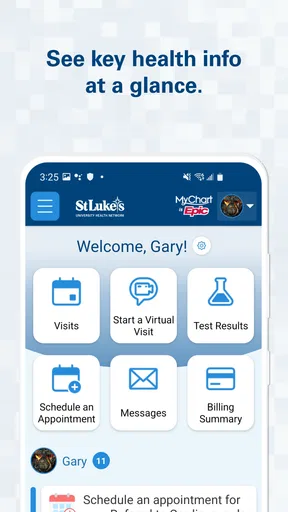
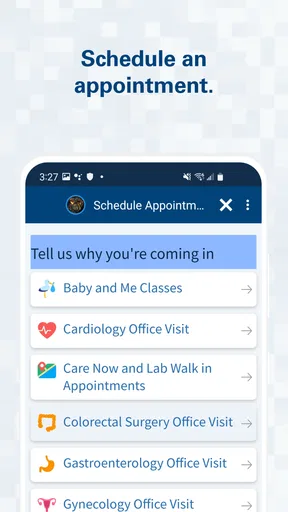
St. Luke’s is a healthcare app designed to help patients connect with St. Luke’s health services from a mobile device. Depending on your location and the services available in your account, you may be able to view medical information, manage appointments, communicate with care teams, review test results, request prescription refills, and access billing or insurance details in one place.
Do I need to be an existing St. Luke’s patient to use the app?
Many of the app’s most useful features require an active St. Luke’s patient account and registration through the organization’s patient portal. Some general tools or public health information may be available without signing in, but access to personal records, appointments, messages, and prescriptions normally requires identity verification. Availability can also depend on your region and the specific St. Luke’s organization you use.
How do I sign in or recover access to my St. Luke’s account?
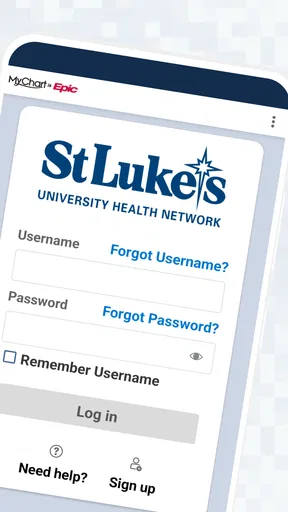
After installing St. Luke’s, you generally sign in with the username and password associated with your patient portal account. New users may need an activation code or registration details provided by St. Luke’s. If you forget your credentials, use the recovery options on the sign-in screen. For security or registration problems, contact the appropriate St. Luke’s support team rather than sharing your login information.
Can I use St. Luke’s for emergencies or urgent medical advice?
The app should not be treated as a replacement for emergency services or immediate medical care. If you are experiencing a life-threatening emergency, call your local emergency number or go to the nearest emergency department. Depending on the available features, St. Luke’s may help you find locations, contact a provider, or request care, but response times for messages and digital requests are not guaranteed.
Is my personal health information secure in the St. Luke’s app?
St. Luke’s is intended to provide secure access to personal healthcare information, and the app may use account authentication, encryption, and other safeguards to protect patient data. However, your own device and account habits also matter. Use a strong, private password, enable device security, avoid signing in on public devices, and log out when appropriate. Review the app’s privacy policy for details about data collection and sharing.


